#kenya
#driving
#central-kenya
#farm
#agriculture
#thika-highway
Nairobi
Kakuzi, Makuyu
Nairobi to Kakuzi
75 km
Total Distance
1.5 hrs
Drive Time
Easy
Difficulty
Year-round
Best Season
The Nairobi–Kakuzi drive is not one that most people make for its own sake. You take the Thika Superhighway north, clear the city in about an hour, and somewhere past Kenol the road enters Kakuzi territory and stays there for the next twenty-odd minutes. Timber plantation on both sides, red soil roads cutting into the orchards, the flat-topped shapes of avocado trees in rows on rolling ground. Kenya has plenty of scenery. This is a different kind of it — working farmland on a scale that’s hard to grasp until you’ve driven through it.
The farm has been here since 1906, when a man called Donald Seth-Smith arrived from Oxford and bought land in Makuyu. Coffee and sisal first. Then avocados, when the coffee got sick in the eighties and they needed to diversify. Then macadamia. Now also blueberries, commercial forestry, and a cattle herd that grazes open grassland between the timber blocks. The whole operation spans 213 km² and is listed on both the Nairobi and London Stock Exchange.
The Farm Walk
This is the main reason to come, and it has to be arranged in advance. You contact Kakuzi directly through their website, request a visit, and they assign someone to take you around. It is not a tourist excursion with a script — it’s a working farm that allows visitors in when it suits them.
The avocado operation is the scale-setter. Kakuzi produces both Hass and Pinkaton varieties, graded by hand, packed in 4kg and 10kg cartons, cold-stored, and shipped to Europe with an average farm-to-market time of 30 days. The pack house during season is full operation — colour-coded crates, sorting lines, cold rooms, the whole chain visible from one end to the other.
The macadamia groves are quieter and better to walk. Mature trees with yellow feathery flowers hanging down, clusters of brown fruits in the canopy. The processing factory next to it is the part that surprises people — dehusking machines, sorting belts, metal detectors, cold storage, packing lines running flat out during harvest. A lot of work goes into getting a macadamia nut into a bag, and you understand the price better after seeing it.
The cattle are Boran — a hardy East African breed, 100% grass-fed, no inputs beyond tick control and early worming. They roam open grassland between the timber plantations. The herd peaked at 7,500 in the 1980s. Smaller now, but the quality is what drives the Boran Barn down the road.
Best time to visit: avocado harvest runs March to October, macadamia in two phases — March to May, and September to October. Outside these windows you’ll still see the orchards and factory, but the operation is quieter.
The Sagana River
If you’re continuing north toward Nyeri or just stretching the drive, the Sagana River crossing a few kilometres past Makuyu is worth a brief stop. The Sagana is the upper Tana — it drains both the Aberdares and the slopes of Mt Kenya and by the time it reaches the A2 bridge it’s moving with intent. The water is broad and brown, the banks are forested, and on a clear day the blue ridge of the Aberdares is visible upstream. It takes five minutes and costs nothing. Pull well off the road first — the bridge is narrow and trucks are frequent.
Boran Barn
No booking required. The barn is open to anyone, and the beef is from the same Boran cattle you may have just seen in the fields. Slow-roasted over charcoal or wood fire, the kind of nyama choma that has a point of difference because the animal was raised fifty metres away on grass. Kachumbari and avocado on the side. A coffee shop with Kakuzi products. A farm market with fresh produce. And a shop where you can buy macadamia nuts — honey-coated, plain, or pressed into cooking oil — and biltong.
It’s a good-sized space, calm, child-friendly, and the kind of place that feels nothing like Nairobi even though you left less than two hours ago.
Buy the macadamia. You’ll wish you’d bought more on the drive home.
Along the Way
Scenic Viewpoints
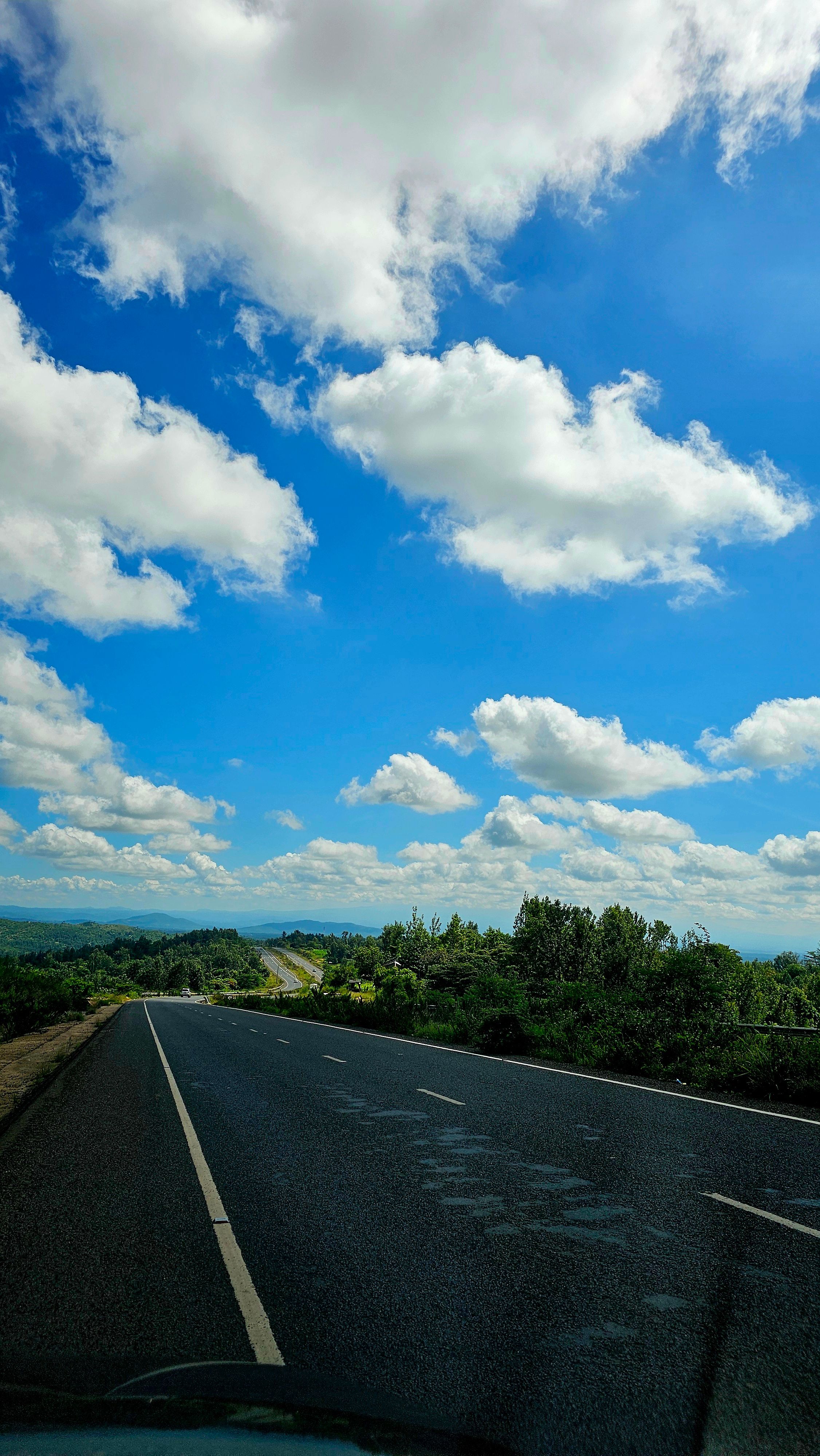
Thika Superhighway — Past the City's Edge
Once you clear the Thika interchange and the last of the Nairobi sprawl falls away, the A2 opens up properly. The road is wide and fast, the air gets cleaner, and the landscape quickly becomes pineapple fields and flower farms. This is a drive where the transition from city to country happens gradually but unmistakably — somewhere between the Blue Post Hotel and Makuyu, you stop thinking about Nairobi.
KM 50 ↑ 1520m
Kakuzi Farm Corridor — Makuyu
Just past Kenol, the road enters Kakuzi territory and stays there for a long stretch. Timber plantation lines the verges on both sides, and behind it, on rolling red-soil terrain, the avocado orchards and macadamia groves run as far as you can see. The farm spans 213 km² — driving through it takes the better part of twenty minutes. There's no formal viewpoint, just the road cutting through one of Kenya's largest private agricultural estates.
KM 67 ↑ 1400m
Sagana River Bridge
A few kilometres past Makuyu, the A2 dips down to cross the Sagana River — the upper reaches of the Tana, draining off both the Aberdares and Mt Kenya. If you're not watching for it you'll miss it, but it's worth pulling off the road nearby and standing at the bank for a minute. The river is broad and brown here, moving fast, with forest on both sides and the distant blue of the Aberdares visible upstream on a clear day.
KM 95 ↑ 1050mPit Stops
Where to Stop

Fuel
Fuel — Thika Superhighway
Multiple Shell, Total, and Rubis stations along the superhighway between Nairobi and Thika. Fill up before you leave the dual carriageway — stations between Kenol and Makuyu are limited. The station at the Garden City Mall interchange or the ones near Ruiru are the most convenient on the outward leg.

Community
Kakuzi Farm Walk — Pre-booked Only
The farm walk has to be requested and booked in advance through Kakuzi directly — this is not a walk-in attraction. Once arranged, you get access to the orchards and processing facilities: avocado groves, macadamia trees, the pack house where fruit is graded and cold-stored before export. The macadamia factory alone is worth the trip — dehusking machines, sorting lines, metal detectors, cold rooms, the whole chain from tree to export crate. Kakuzi also runs a blueberry operation under tunnels, and their grass-fed Boran cattle herd roams open grassland between the timber plantations. The farm has been operating since 1906 and running cattle since the 1980s. The walks are most interesting during harvest season — avocado from March to October, macadamia in March–May and September–October.
Food
Boran Barn — Kakuzi
The Boran Barn is the public-facing side of Kakuzi — no booking required. The beef comes from Kakuzi's own grass-fed Boran herd, slow-roasted over charcoal, and it is the point of the whole stop. Accompaniments are simple: kachumbari, avocado, salad. There's a coffee shop with Kakuzi products, a farm market with fresh produce, and a shop where you can buy blueberries, macadamia oil, macadamia nuts — honey-coated or plain — and biltong. Child-friendly. Good for groups. The setting is open farmland, calm, and very far from Nairobi traffic.
Before You Go
Driving Tips
Book the farm walk through Kakuzi directly before you go — kakuzi.co.ke. They do not take walk-ins for the orchard and factory sections.
Leave Nairobi before 7 AM to clear the Thika Road traffic. The superhighway is fast once you're through Ruiru and Thika town, but both can swallow time on a weekday morning.
The Boran Barn is open to anyone without booking. If the farm walk falls through for any reason, the Barn alone is worth the drive.
Buy macadamia nuts from the shop at the Barn. Kakuzi processes their own — the honey-coated version is hard to leave without.
The farm corridor between Kenol and Makuyu is where you notice the scale of Kakuzi. It's 213 km² — the only extensive ranch in Murang'a County. Watch for the timber plantations and orchards on both sides of the A2.
Sagana River is worth a five-minute stop if you're continuing north. The bridge is narrow and trucks are frequent — pull well off the road before walking to the bank.
Avocado season runs March to October. If you're visiting during this period, the pack house is in full operation and the most active to visit.
Fuel up before Kenol. Options on the A2 between Kenol and Makuyu are limited and not always reliable.