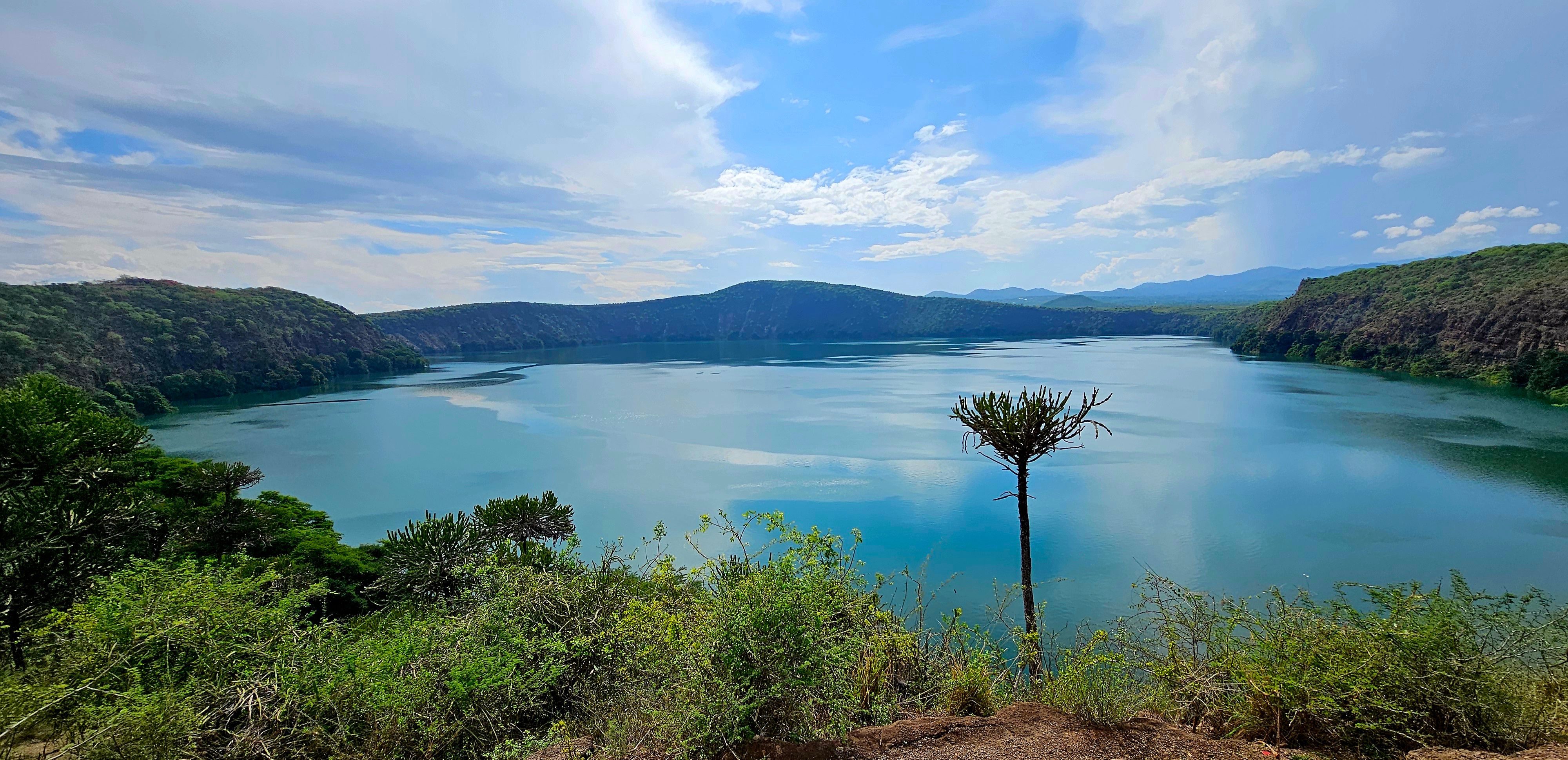
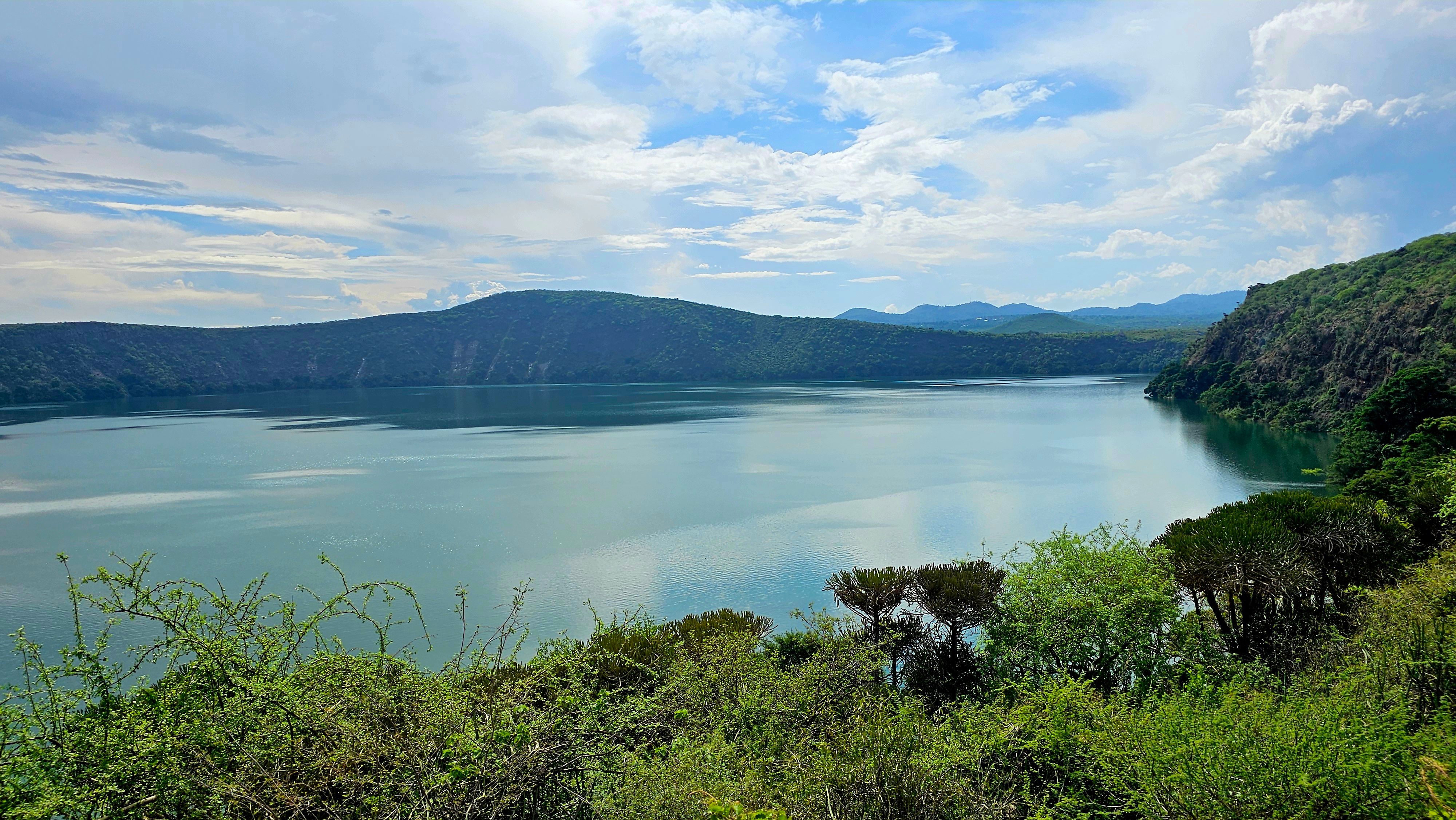
Lake Chala sits in a volcanic crater on the border between Kenya and Tanzania, hidden from everything. You don’t stumble upon it, you have to seek it out. And when you finally reach the rim and look down, the colour of the water stops you cold. Turquoise so deep it almost looks unreal, surrounded by steep crater walls thick with vegetation.
The lake lies just east of Mount Kilimanjaro, though you wouldn’t know it until the clouds clear. The crater walls rise sharply around the water, thick with green vegetation that makes the lake feel sealed off from the rest of the landscape.
I came here on a detour from Taveta, following a dirt road that didn’t inspire much confidence. The road winds through dry bushland and scattered farms, and for a while it feels like you’re going nowhere. You’ll an old cement sign for the lake. A few metres up, a stop at the gate. to pay like 50 for the community. From the top the crater rim opens up and the lake appears below, the whole drive suddenly makes sense.
A Crater Lake Like No Other
What makes Chala special isn’t just the colour, it’s the stillness.
The lake sits inside an ancient volcanic crater believed to have formed roughly a quarter of a million years ago during the same volcanic activity that shaped the Kilimanjaro region. Over time the crater filled with water, creating the deep basin that exists today.
Unlike many lakes in East Africa, Chala has no rivers flowing into it. Most of the water arrives underground, filtering through volcanic rock from rainfall around Mount Kilimanjaro. Because of that natural filtration, the lake is remarkably clear, and its colour changes depending on the light, sometimes deep blue, sometimes bright turquoise, sometimes almost emerald.
The lake itself is larger than it first appears from the rim. It covers roughly four square kilometres and drops to depths close to 100 metres in some places. Standing above it feels less like looking at a lake and more like peering into a giant natural bowl carved into the earth.
And despite all that scale, the place is incredibly quiet.
Getting Down to the Water
There’s a steepish trail from the rim down to the water’s edge. It takes less than ten minutes. Some loose rocks, thorny bushes, and a gradient that is quite manageable.
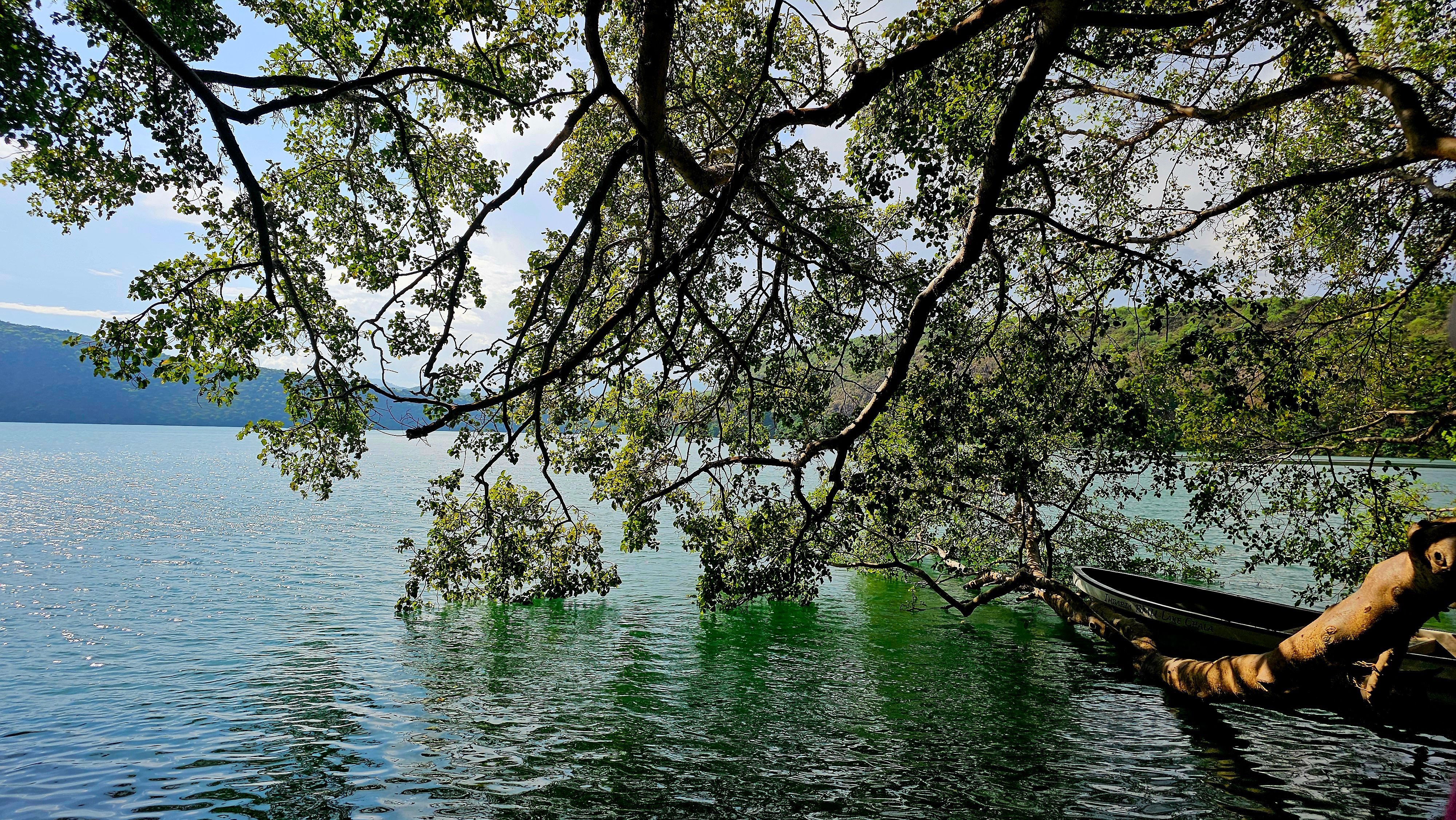
As you descend, the vegetation becomes thicker. The dry bush near the top gives way to greener patches closer to the water where the crater walls trap moisture and shade.
But at the bottom, you can swim in water so clear you can see the rocks many metres below. Don’t let that fool you though, the lake drops off quickly and is far deeper than it looks from the surface.
The locals will tell you there are crocodiles in the lake. Whether that’s true or just a long-standing story depends on who you ask. Some say crocodiles were introduced decades ago but never thrived in the steep crater environment.
Either way, when you’re standing beside water that deep and that quiet, you don’t feel like testing the theory.
The water was cool, impossibly clear, and the silence at the bottom of the crater was complete.
Some of the locals also offer to give you a boat ride on the lake. They say crossing it can take a full day all the way across, which sounds exaggerated at first, until you stand there and realise just how wide the crater actually is.
Life Around the Crater
Although the lake feels isolated, the surrounding area is part of the wider Kilimanjaro ecosystem. Wildlife still moves through the nearby bushland from time to time.
Baboons and vervet monkeys are common around the crater rim, and the area is known to have dik-diks and other small antelope. Birds are everywhere, fish eagles, kingfishers, and dozens of other species that thrive around the lake.
In fact, Lake Chala is known among birders as one of the quieter birdwatching spots in the region simply because so few people visit it.
The lake itself even hosts a rare species of tilapia found nowhere else in the world, a reminder of how isolated this crater ecosystem really is.
Stories the Lake Carries
Like many places that feel older than the maps drawn around them, Lake Chala comes with its share of stories.
Some local folklore says a village once existed where the lake now sits, swallowed when the crater collapsed long ago. Other versions say spirits still live in the water.
Whether those stories are meant literally or not, standing alone on the crater rim as the sun begins to set, it’s not hard to see why people imagined them.
There is something ancient about the place.
Something quiet.
Something that feels like it has been sitting there unchanged for a very long time.
Some places don’t need to be famous to be unforgettable.
If you’re in the Taveta area, don’t skip Lake Chala.
Bring water, wear proper shoes, and leave early — the morning light on the crater walls is extraordinary. When the sun hits the water just right, the lake turns a shade of turquoise that almost looks impossible.