The plan was simple enough. Drive to the Aberdares, find the gate, get to the falls. It did not go that way.
We came in from the western side via Ndunyu Njeru — the route that takes you off the A104 after Soko Mjinga, through Thika Gatura road and then up the Ndunyu Njeru road toward Mutubio Gate. On paper it’s straightforward. On the ground, somewhere between the last tarmac and the park boundary, we got well and truly lost. The roads up here don’t forgive vague directions. There’s no signal, no signage worth trusting, and every murram fork looks like the right one until it isn’t. We doubled back twice before we found the right track.
One thing that helps: once you hit the Ndunyu Njeru junction, stay on the main road climbing uphill toward Kahuruko. The gate is after the descent on the far side — Mutubio Gate — where the tarmac reappears briefly before the park eats everything again. If you’re planning this drive, download offline maps before you leave Nairobi. Don’t rely on data up here.
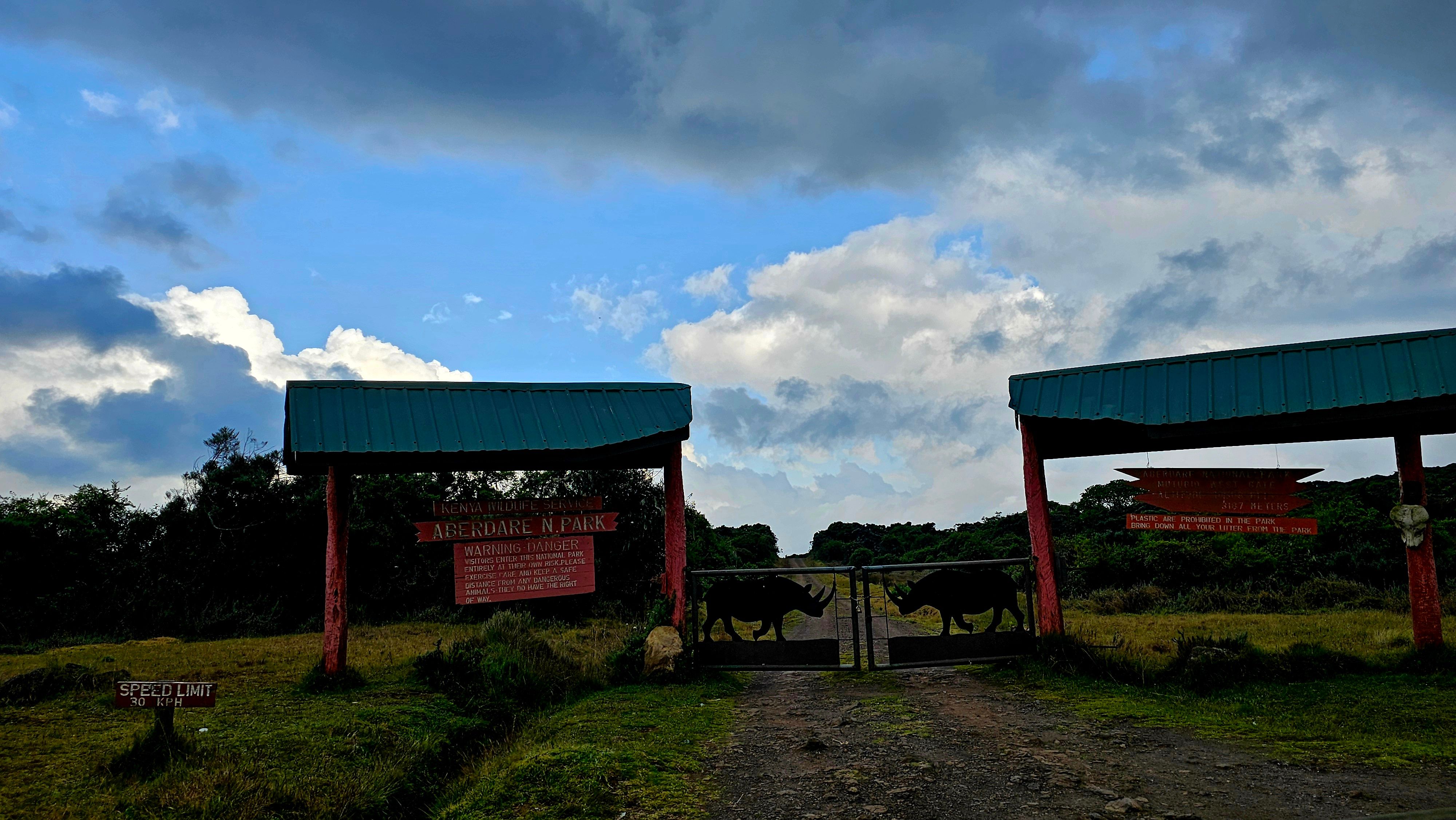
Into the Park
At the gate you pay your KWS fees and get assigned an armed ranger guide, this is probably optional and it’s not just a formality. The rangers know where the animals are, know the tracks, and know when to stop the vehicle.
Payment is cashless through ecitizen, M-Pesa or card. There’s no ATM between Nairobi and here, you can also make payments online before leaving.
From Mutubio Gate, it’s 9 kilometres to the falls viewpoint. Not 9km on tarmac — 9km of park track, the kind that asks questions of your suspension and your ground clearance in roughly equal measure. A good 4WD handles it fine in dry conditions. In the rains, the same road is a different conversation entirely.
What You See on the Way
The 9km drive is the drive. Don’t rush it.
The forest closes in quickly after the gate — dense cedar and olive, the canopy blocking out the sky. Then the track opens onto moorland and the scale of the place becomes apparent. You’re treated to views of golden moorlands and cool forests filled with cedar trees. It looks like no other part of Kenya.
We stopped twice before we even reached the falls.
First for a herd of buffalo — a big group, maybe thirty animals, standing in the track with zero interest in moving. The guide told us to stay in the car and cut the engine. We sat for ten minutes while they finished whatever they were doing and eventually moved off into the undergrowth. There’s something about the weight of a buffalo herd that resets your sense of where you are. You stop thinking about the drive and start paying attention.
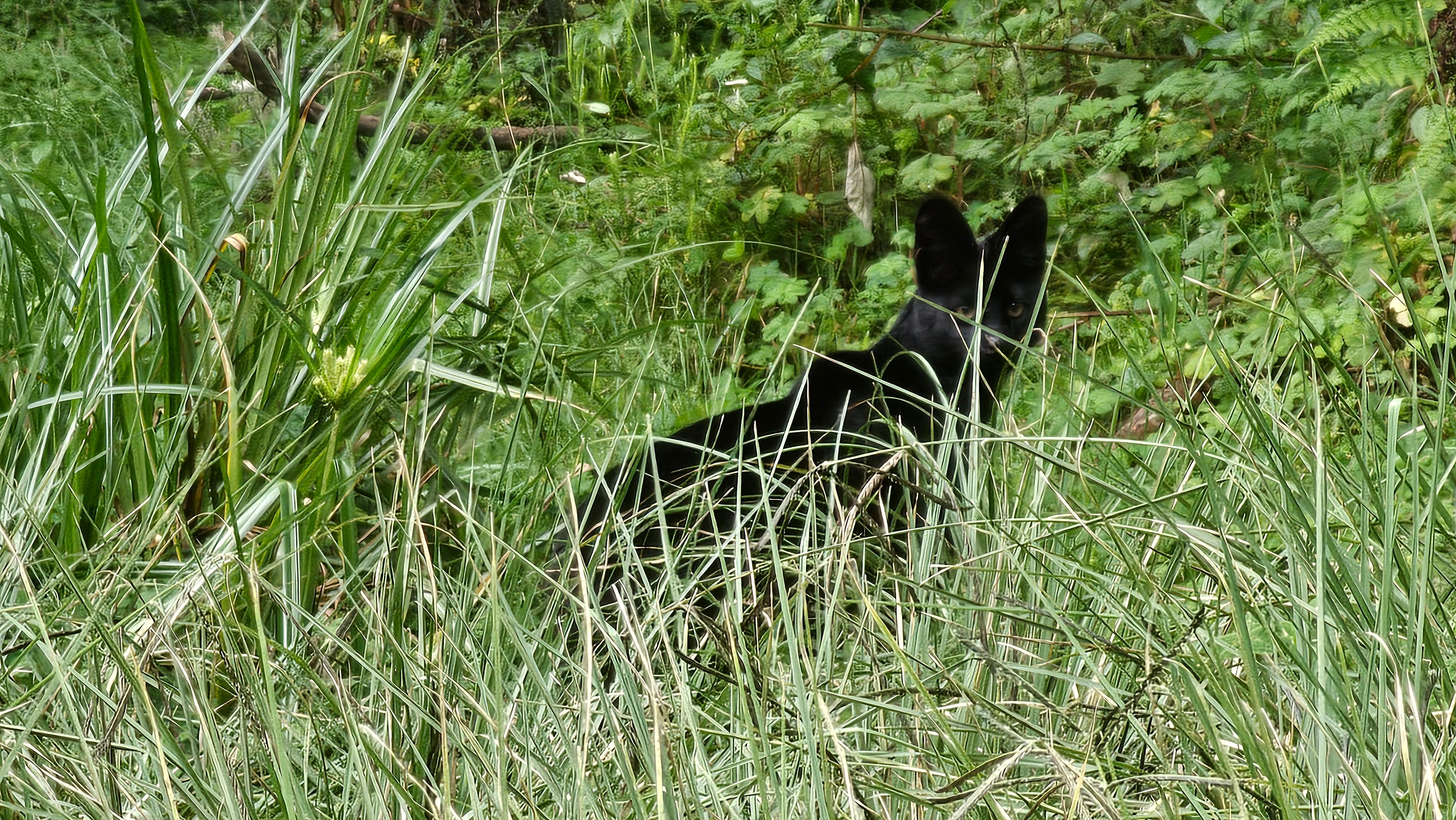
Then, a few kilometres further on, the guide touched my arm and pointed into the undergrowth at the edge of the track. An African wildcat — small, dark, crouched low in the grass — watching us from maybe eight metres away. It held its position for long enough to look back, then slipped into the forest. You don’t see them often. They’re nocturnal mostly and wary, and this one seemed almost offended at being noticed.
The Campsite
We passed the campsite on the drive in — a cleared area in the forest with basic facilities and a fire pit, and absolutely nothing else for kilometres in any direction. The kind of place that sounds very appealing at noon and slightly more complicated at midnight.
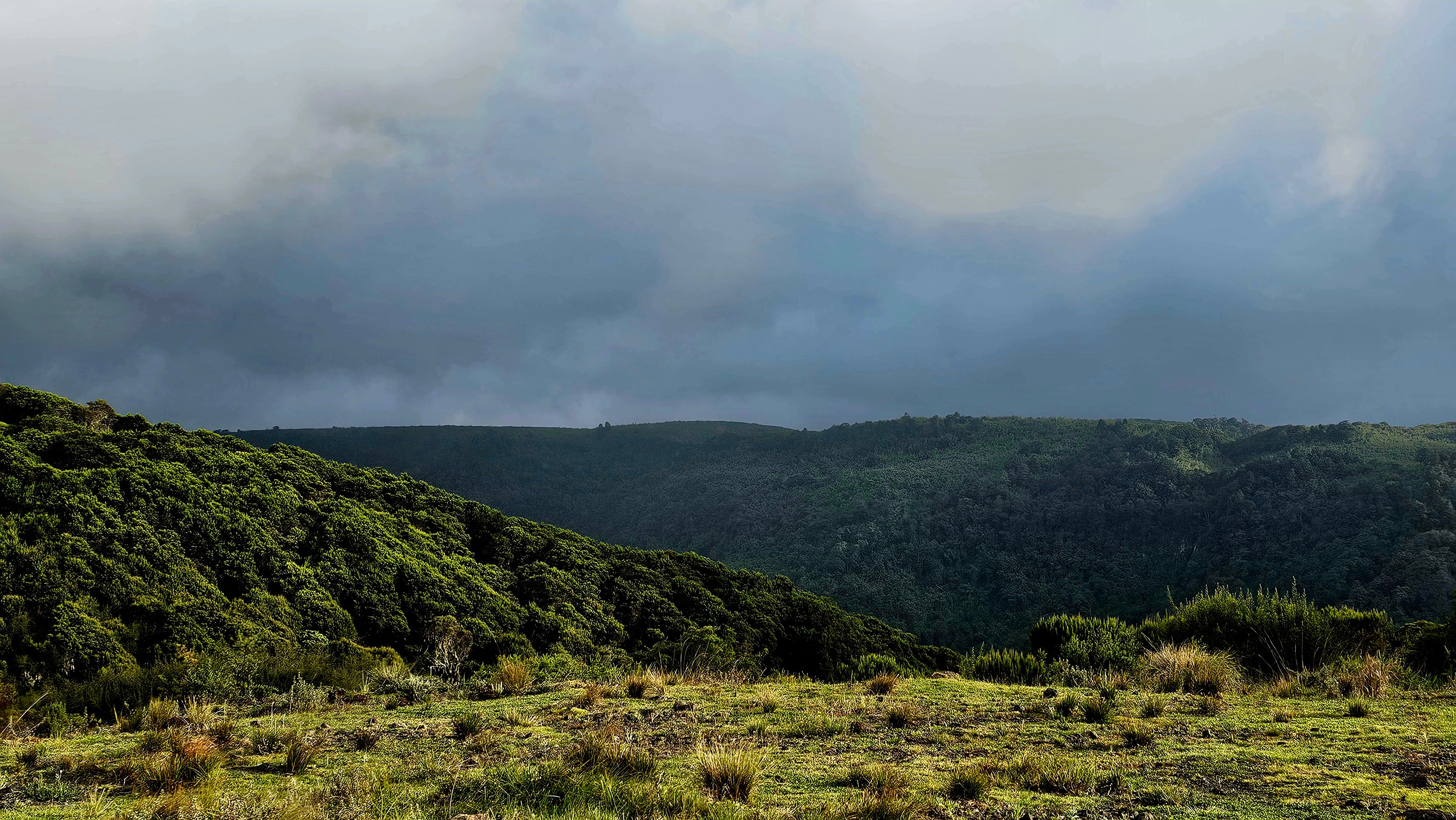
If you’re serious about the Aberdares — and you should be — camping here means an early start for the falls with the mist still in the valley, which is the only way to see them properly.
Karuru Falls
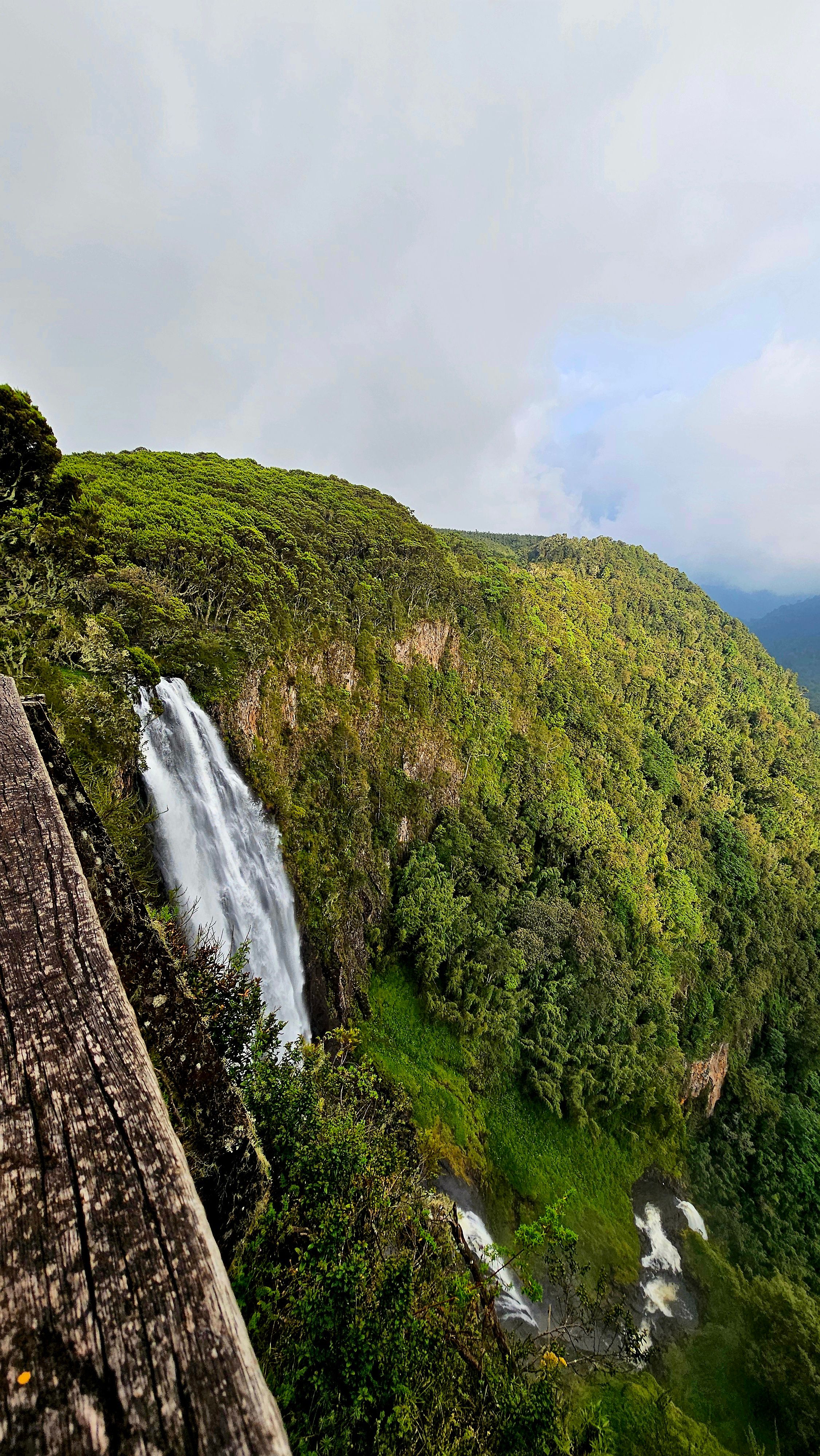
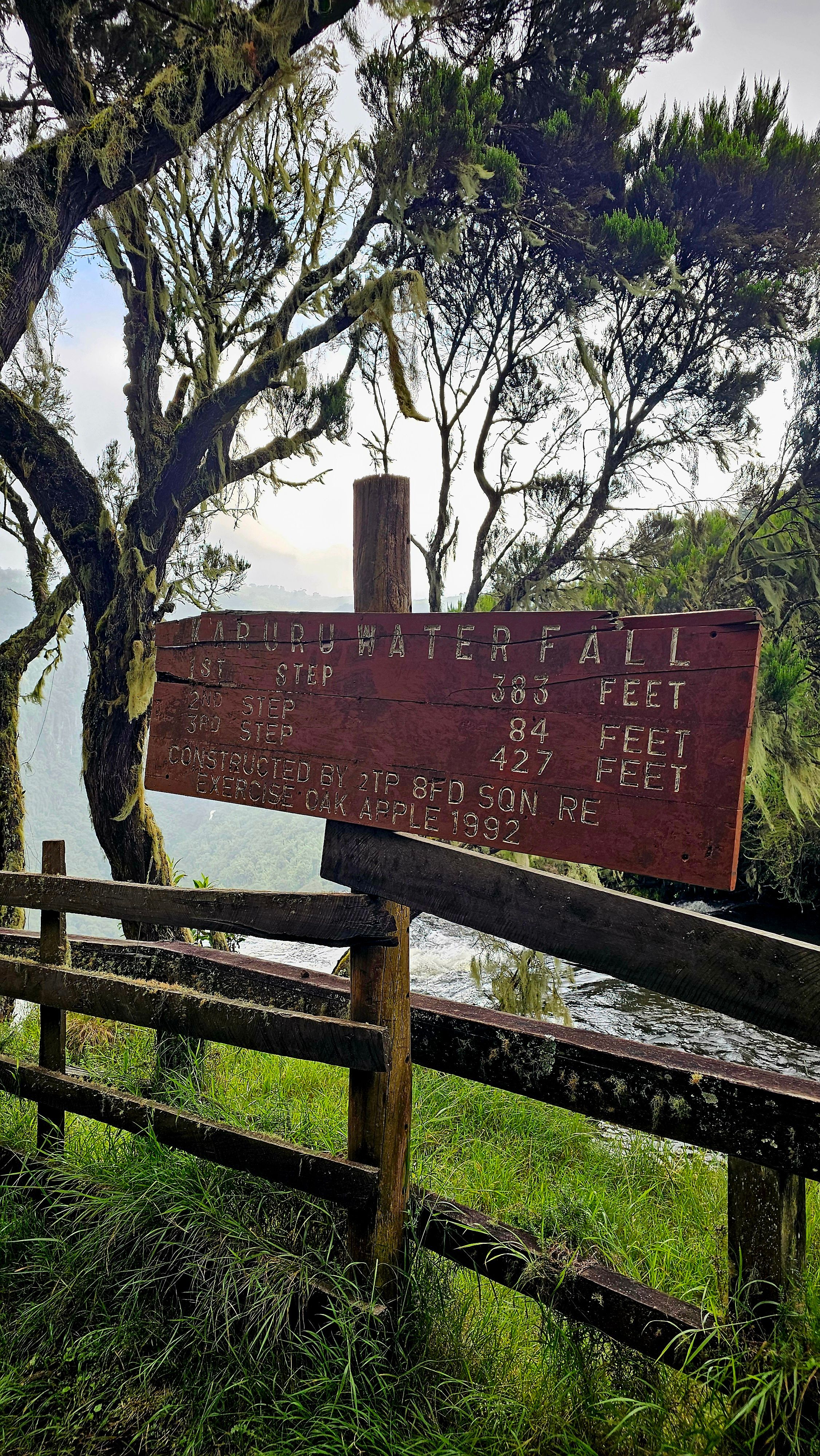
Karuru Falls has three tiers: the first at 117 metres, the second at 26 metres, and the third at 130 metres — totalling 273 metres, making it the highest waterfall in Kenya. Those numbers don’t mean much until you’re standing at the viewpoint and trying to trace where the water goes after the first drop. It disappears into forest and mist long before it reaches the bottom.
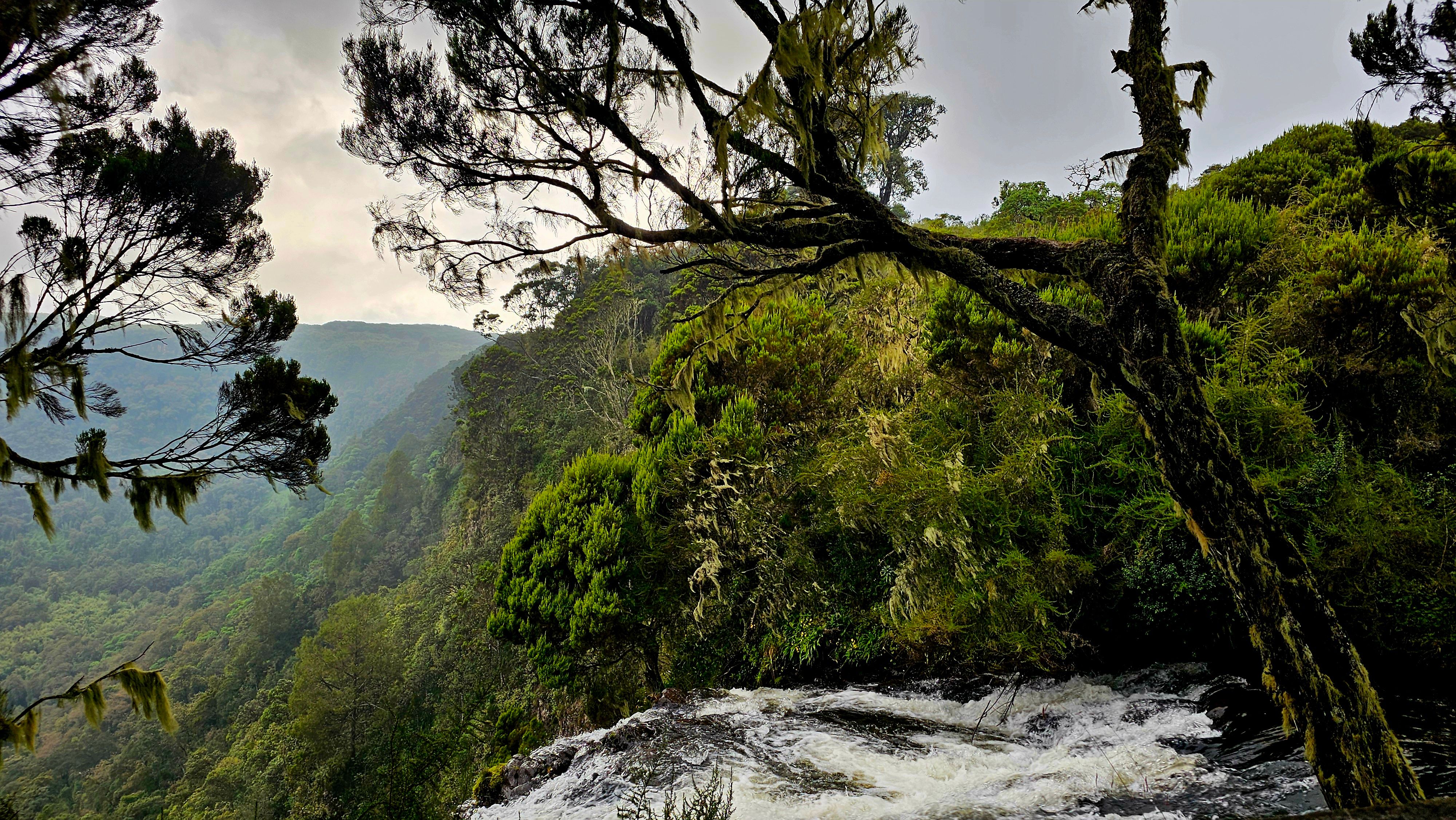
You hear it before you see it. A low, sustained rumble that gets louder as the track approaches the gorge rim. Then the trees thin and the viewpoint opens and the whole thing is just there — a wall of white water dropping into a green gorge with mist rising back up out of it.
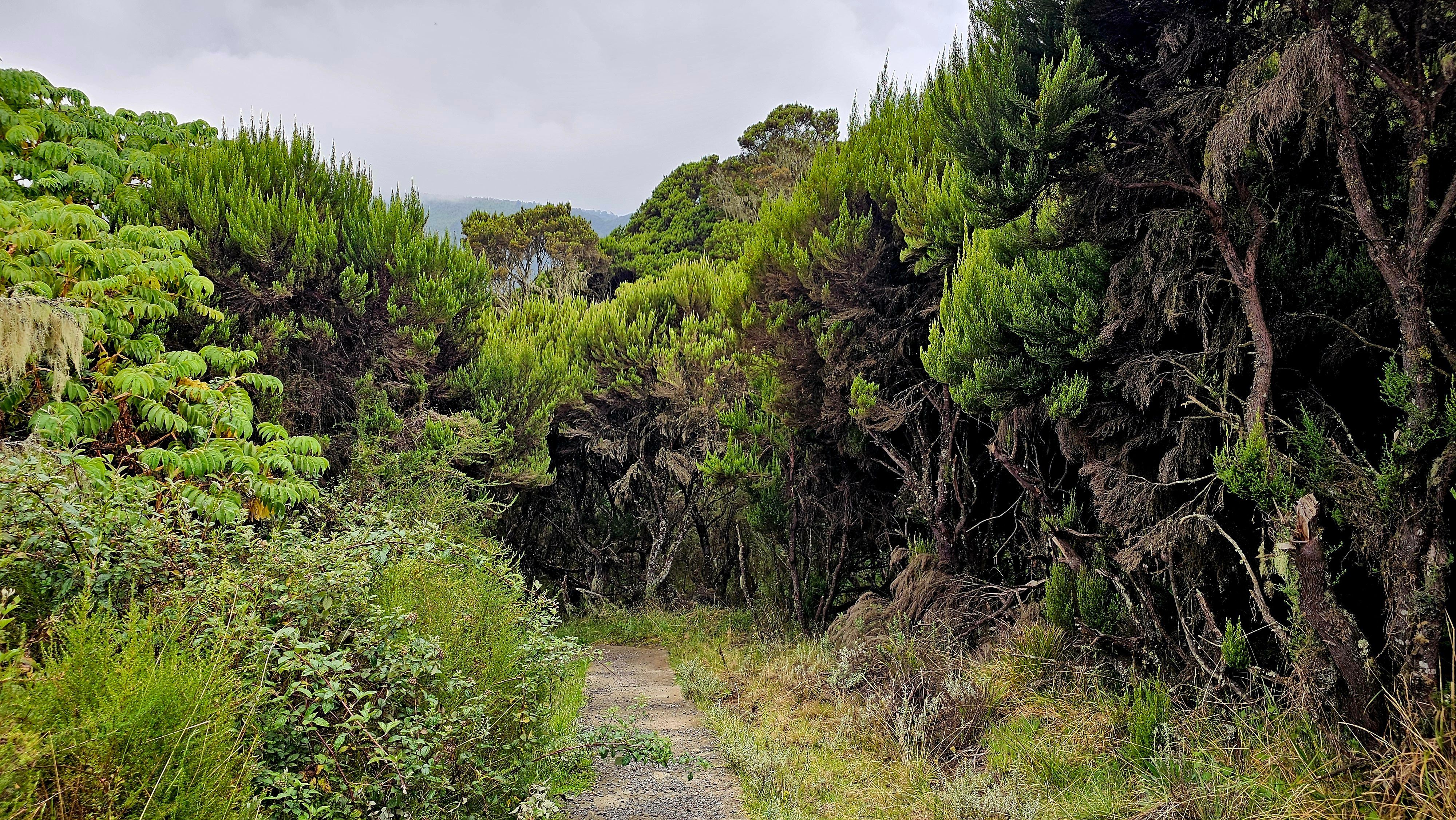

There are two viewing platforms. No hiking trails lead to the bottom of the falls for safety reasons — both falls stream into impenetrable ravines. You view from above, which is fine. The upper perspective is where the scale is most legible — you can see the first tier, the dense forest canopy far below, and on a clear day glimpse the second drop through the trees.
From the same viewpoint, Gura Falls is visible across the gorge. It doesn’t get its own signposting and most people don’t realise they’re seeing two waterfalls at once.
The Three Tiers
From the viewing point, you witness the powerful first drop, followed by the water weaving through the dense, pristine forest far below before crashing into the river. The second and third tiers are largely concealed by the canopy, appearing only as flashes of white through the trees when the wind moves the branches.
It’s cold here. The Aberdares sit above 3,000 metres and the gorge generates its own microclimate — the mist coming off the falls chills everything within range. Bring a layer you don’t mind getting damp.
What I’d Do Differently
Go earlier. We arrived in the early afternoon, which meant the mist had mostly lifted and the light was flat. The falls face east and catch morning light, if you camp at the park campsite or start from Nairobi before 6am, you have a chance at the mist-and-golden-hour combination that makes the Aberdares photographs you actually want.
If you camp give yourself two days. The park has four waterfalls — Karuru, Gura (viewable from Karuru), Chania, and Magura. Chania has three viewing platforms, each lower than the other, making it a hike all the way to the bottom — the most beautiful of them all. We didn’t make it to Chania. That’s unfinished business.
The Aberdares also host the second-largest population of the endangered black rhino in Kenya, and large herds of forest buffalo and elephants are frequent visitors. We got the buffalo. The rhino remains on the list.
The Aberdares remind you that Kenya isn’t just savannah and beaches. Some of its most powerful landscapes are hidden in the highlands, behind bad roads and no signal and a lot of wrong turns.
Bring layers. Bring rain gear. Download your maps offline. And if you get lost on the Ndunyu Njeru road — you’re probably not far from the gate. Keep looking.